
With the EU AI Act's high-risk enforcement date looming, standard engineering documents are suddenly legal requirements. Here is how to align your DevOps pipelines without freezing deployments.
As of August 2, 2026, the EU AI Act's strict provisions for "high-risk" AI systems (defined in Annex III) become legally enforceable. While legal teams have spent the last two years debating risk tiers, the actual burden of compliance has quietly shifted to engineering.
The prevailing commentary from EU legal experts is clear: you cannot paper over an opaque system with a good privacy policy. The regulation demands compliance by design. Under the Act, standard engineering artifacts—like Architecture Decision Records (ADRs), CI/CD logs, and deployment gates—are now auditable legal documents required for CE marking and Conformity Assessments.
Key Insight
Architecture Decision Records, CI/CD logs, and deployment gates are no longer just engineering best practices—they are auditable legal documents required for CE marking and Conformity Assessments under the EU AI Act.
The August 2026 Date Is Real, But It Is Now Contested
Before you re-architect anything, you need to understand the single most important fact about the timeline as it stands today—because it changes your risk posture, not your engineering work.
The EU AI Act (Regulation (EU) 2024/1689) entered into force on August 1, 2024, with a deliberately staggered application schedule:
EU AI Act Application Timeline
The Digital Omnibus on AI
By late 2025 it was widely acknowledged that the high-risk regime was not going to be ready in time: national competent authorities were still being designated, and—critically for engineers—the harmonised technical standards that translate the law into testable requirements arrived months late.
In response, the European Commission tabled the Digital Omnibus on AI on 19 November 2025, a package of targeted amendments to the AI Act. After a failed first attempt, the European Parliament and the Council reached a provisional political agreement on 6–7 May 2026.
Digital Omnibus Proposed Date Changes
| Obligation | Original Date | Proposed Date |
|---|---|---|
| Standalone Annex III high-risk systems | 2 Aug 2026 | 2 Dec 2027 |
| Annex I embedded high-risk systems | 2 Aug 2027 | 2 Aug 2028 |
| Article 50 transparency rules | 2 Aug 2026 | 2 Dec 2026 |
| Regulatory sandboxes | 2 Aug 2026 | 2 Aug 2027 |
The catch: As of June 2026, the Omnibus is not yet law. It still requires a European Parliament plenary vote, formal Council adoption, and publication in the Official Journal. Until that publication happens, 2 August 2026 remains the legally operative date, and a court or market-surveillance authority will apply the text on the books, not the text in trilogue.
The Smart Engineering Posture
If you build the controls now and the Omnibus passes, you have gained
roughly 16 extra months to refine, test, and harden the same pipeline you would have
needed anyway.
If you wait for the Omnibus and it slips, is amended, or fails, you are
exposed on 2 August 2026 with no remediation runway—and technical documentation,
risk-management systems, and conformity assessments cannot be reconstructed overnight.
Know Your Hat: Provider vs. Deployer
Almost every obligation in the Act attaches to a specific role, and most engineering teams get this wrong by assuming "we use AI, therefore all of this applies to us." It depends on which hat you wear—and you can wear more than one.
Providers (Article 16)
Develop a high-risk system, or have one developed, and place it on the market under their own name or trademark.
Obligations: Risk-management system, technical documentation, quality management system, conformity assessment, CE marking, and registration.
Deployers (Article 26)
Use a high-risk system under their own authority in a professional capacity.
Obligations: Human oversight staffing, use per provider instructions, operation monitoring, log retention, and (for certain deployers) Fundamental Rights Impact Assessment.
The trap to watch for is Article 25: if you substantially modify a high-risk system, put your own name on it, or repurpose a non-high-risk system into a high-risk use, you can be reclassified as the provider and inherit the full provider obligation set. Fine-tuning a foundation model and shipping it for a hiring-decision use case is a classic way to walk into provider status without realising it.
Is It Even High-Risk? The Article 6 Classification Gate
Do not build the entire compliance pipeline before confirming the system is in scope. Annex III lists the high-risk use cases:
- Biometrics
- Critical infrastructure
- Education and vocational training access
- Employment (hiring, task allocation, monitoring, termination)
- Access to essential private and public services (including credit scoring and insurance risk pricing)
- Law enforcement
- Migration and border control
- Administration of justice
EU AI Act Risk Classification Pyramid
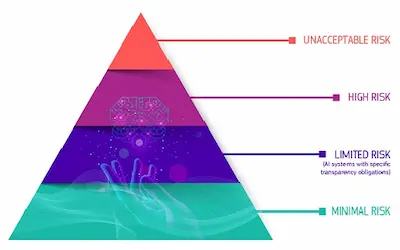
But Article 6(3) contains a derogation that engineers and counsel routinely overlook: a system that falls within an Annex III category is not high-risk if it does not pose a significant risk of harm to health, safety, or fundamental rights, including because it does not materially influence the outcome of decision-making.
1. Automated ADR Generation (Article 11 & Annex IV)
Stop treating Architecture Decision Records (ADRs) as separate documents managed in wikis or shared drives. Move them into your version control system alongside the codebase.
Article 11 of the EU AI Act demands comprehensive Technical Documentation drawn up before a system is put into service and kept up to date thereafter. Annex IV lists the exhaustive elements required:
- A general description of the system, its intended purpose, and the persons who developed it
- A detailed description of the system's elements and development process, including design specifications, system architecture, and key design choices including rationale and assumptions made
- Data requirements: datasheets describing training methodologies and provenance, scope, and characteristics of training, validation, and testing data
- An assessment of human oversight measures and of accuracy, robustness, and cybersecurity
- A description of the risk-management system (Article 9) and any changes made through the system's lifecycle
Practical Implementation
Git-Driven Governance
Store ADRs as Markdown files directly in the repository (e.g., docs/adr/).
They must be immutable. When a decision changes, publish a new ADR that supersedes it.
Adopt a consistent template (MADR) with explicit fields for Status, Context, Decision,
Consequences, and cross-references to relevant Annex IV sections.
Pipeline Enforcement
Implement pre-commit hooks or CI/CD branch protection rules that scan for architectural changes. If a change is detected, the pipeline blocks the pull request until a peer-reviewed ADR is linked.
Document the "Rejected"
Under Article 9 (Risk Management System), regulators look for active, ongoing risk management. Your ADR must explicitly state not just what was chosen, but what alternatives were rejected and why.
2. The "Pause-and-Review" Gate (Article 14)
The AI Act mandates a human override capability (Article 14: Human Oversight) for high-risk systems. European regulatory commentary heavily emphasises the difference between nominal and effective oversight. Assigning a human to watch a dashboard is nominal; giving them the context, authority, and mechanism to halt a system is effective.
Article 14 is unusually specific about what effective oversight requires:
- Understand the system's capacities and limitations and monitor its operation
- Remain aware of the tendency to over-rely on automated output (automation bias)
- Correctly interpret the output
- Decide not to use the system or to disregard, override, or reverse its output
- Intervene or interrupt operation through a "stop" button or comparable procedure
Human Oversight Postures
System cannot act until human approves"]:::primary B["Human-on-the-loop
System acts, human monitors and intervenes"]:::secondary C["Human-in-command
Human decides if/how system is used"]:::tertiary end A --> |"Highest
Control"| D["Most Consequential
Decisions"]:::accent B --> D C --> D classDef primary fill:#E8E4DD,stroke:#7A2E22,stroke-width:2px,color:#1C1917 classDef secondary fill:#E4F0ED,stroke:#1E6B5C,stroke-width:2px,color:#1C1917 classDef tertiary fill:#EAEDE6,stroke:#5C6B4A,stroke-width:2px,color:#1C1917 classDef accent fill:#7A2E22,stroke:#7A2E22,color:#F5F0EC
Practical Implementation
- Human-in-the-Loop (HITL) SDLC: Shift the human engineering role from "Doer" to "Commander." Implement an "Architecture & Compliance Gate" in your deployment pipeline.
- The Reasoning Trace: Before an AI system executes a consequential action, it must generate a machine-readable summary of why it made the decision, mapping back to its prompt context and training parameters.
- Approval Workflows: The pipeline halts and pings a designated reviewer with required domain competence. Only a cryptographic sign-off from an authorised human allows the pipeline to proceed.
3. Immutable Logging and Data Lineage (Articles 10, 12 & 50)
"We lost track of the training data" is now a strict liability failure. Article 10 (Data Governance) demands that training, validation, and testing datasets be "relevant, sufficiently representative, and to the best extent possible, free of errors."
Article 12 requires automatic, immutable logging of system events to trace operations back to specific inputs over the system's lifetime.
Practical Implementation
- Hash Binding: Use tools like Data Version Control (DVC) or MLflow to cryptographically bind model weights to the exact dataset hash used during training.
- Sidecar Architecture for Telemetry: Deploy logging and guardrail functions as "sidecars" alongside your AI models. The sidecar captures the exact prompt, context state, and generated output, writing to an immutable, append-only ledger.
- Provenance Tagging (Article 50): Ensure all synthetic content is tagged with machine-readable metadata. Consider C2PA / Content Credentials for watermarking.
Deployer-side Retention (Article 26(6))
Deployers must keep the logs automatically generated by a high-risk system for a period appropriate to the purpose—at least six months unless other law requires otherwise. Make log export and retention a configurable, contractual feature of the product.
4. Continuous Accuracy Monitoring (Articles 15 & 72)
Periodic, manual risk audits are dead. Article 15 dictates that systems must maintain an appropriate level of accuracy, robustness, and cybersecurity throughout their lifecycle. Article 72 mandates a continuous Post-Market Monitoring (PMM) system.
Furthermore, if a model undergoes a "substantial modification" in its performance or logic, it legally triggers the need for a completely new conformity assessment.
Practical Implementation
- Drift Thresholds: In your initial ADR and Technical Documentation, mathematically define the acceptable performance and accuracy thresholds for the model.
- Automated Telemetry: Implement continuous monitoring for dataset drift (does the live data match the training data?) and performance degradation.
- Kill Switches & Fallbacks: If automated telemetry detects that accuracy has dropped below the ADR's declared threshold, the system should automatically trigger an alert, revert to a fallback deterministic system, and halt further automated deployments.
EU AI Act Penalty Tiers (Article 99)
Penalties and the Enforcement Reality (Article 99)
Article 99 establishes three tiers of administrative fines, each set as the higher of a fixed amount or a percentage of total worldwide annual turnover:
| Tier | Trigger | Maximum Fine |
|---|---|---|
| Tier 1 | Violating Article 5 prohibitions | €35M or 7% of global turnover |
| Tier 2 | Breaching high-risk obligations (Articles 9–15, 16, 17, 26, 43, 49, etc.) | €15M or 3% of global turnover |
| Tier 3 | Supplying incorrect/misleading information to authorities | €7.5M or 1% of global turnover |
For SMEs and start-ups, the fine is the lower of the fixed amount and the percentage. Beyond fines, national authorities can order systems withdrawn from the market.
Visualising the Compliant Pipeline
EU AI Act Compliant Development Pipeline
document the assessment
(Art. 6(4))"]:::success Y -- Yes --> W{"Art. 6(3) derogation
applies?"} W -- Yes --> X W -- No --> A["Code/Model Commit"]:::process A --> B["CI/CD Pipeline"]:::process B --> C{"ADR Exists?"} C -- No --> D["Block: Fails Annex IV"]:::block C -- Yes --> E["Bind Data Hash"]:::teal E --> F["Training & Validation"]:::teal F --> G{"Accuracy >= ADR
Threshold?"} G -- No --> H["Block: Fails Article 15"]:::block G -- Yes --> CA{"Substantial
modification?
(Art. 43(4))"} CA -- Yes --> RA["New Conformity
Assessment (Art. 43)"]:::sage CA -- No --> I["Deploy to Staging"]:::sage RA --> I I --> J["Article 14
Human Oversight Gate"]:::accent J --> K{"Human Sign-off?"} K -- Reject --> L["Return to Dev"]:::block K -- Approve --> M["Deploy to Production
(CE mark + EU DB registration)"]:::success M --> N["Article 12
Sidecar Logging"]:::teal M --> O["Article 72
Post-Market Monitoring"]:::teal O -- Drift Alert --> P["Kill Switch /
Deterministic Fallback"]:::warning O -- Serious incident --> Q["Report within
15/10/2 days (Art. 73)"]:::warning classDef start fill:#E8E4DD,stroke:#1C1917,stroke-width:2px,color:#1C1917 classDef process fill:#F5F3EE,stroke:#78756F,stroke-width:1px,color:#1C1917 classDef accent fill:#7A2E22,stroke:#7A2E22,color:#F5F0EC classDef teal fill:#E4F0ED,stroke:#1E6B5C,stroke-width:2px,color:#1C1917 classDef sage fill:#EAEDE6,stroke:#5C6B4A,stroke-width:2px,color:#1C1917 classDef success fill:#1E6B5C,stroke:#1E6B5C,color:#fff classDef block fill:#7A2E22,stroke:#5A1E15,color:#F5F0EC classDef warning fill:#B8860B,stroke:#8B6508,color:#fff
A Note on the Missing Standards
Compliance with the high-risk requirements is meant to be demonstrated against harmonised technical standards developed by CEN-CENELEC, which confer a presumption of conformity. Those standards arrived materially late, compressing the runway for the very teams expected to implement them.
Until the harmonised standards are fully published and cited in the Official Journal, many teams are anchoring to adjacent international standards:
- ISO/IEC 42001 for AI management systems
- ISO/IEC 23894 for AI risk management
Document which standard you built to and why; "we aligned to the available state of the art" is a stronger position than silence.
The GPAI Code of Practice: A Parallel Regime
Everything above concerns high-risk AI systems. There is a second, structurally separate track of the AI Act that most "high-risk readiness" commentary ignores—and it is already in force. If your organisation trains, or substantially fine-tunes, a foundation model, this track is yours, and the clock started on 2 August 2025.
That track is the regime for general-purpose AI (GPAI) models under Articles 53 and 55, and the practical playbook is the General-Purpose AI Code of Practice, published by the European AI Office on 10 July 2025.
The Four Named Systemic Risks
Beyond the open-ended identification process, the Code specifies four systemic risks that every in-scope provider must consider. For an evaluations team these are not abstractions; they are the threat models your red-teaming and benchmarks have to probe:
1. CBRN Uplift
Chemical, biological, radiological and nuclear uplift—lowering barriers or increasing impact for weapons or materials.
2. Loss of Control
Humans losing the ability to reliably direct, modify, or shut down a model, via misalignment, self-reasoning, deception, or power-seeking.
3. Cyber Offence
Enabling large-scale, sophisticated attacks (e.g., automated vulnerability discovery, exploit generation, attack scaling).
4. Harmful Manipulation
Strategic distortion of beliefs or behaviour at population scale or against high-stakes decision-makers, especially via undetectable multi-turn influence.
Serious Incident Reporting (GPAI)
The Code requires building the evidence trail before incidents happen. Initial reports go to the AI Office on tight, harm-specific clocks:
GPAI Serious Incident Reporting Deadlines
The EU AI Act Architecture Readiness Checklist
Use this baseline to audit your current engineering workflows ahead of the high-risk deadline:
Classification & Role
- ☐ Confirmed current application date and building to controls regardless
- ☐ Documented per-system role: provider (Art. 16), deployer (Art. 26), or both
- ☐ Assessed each system against Annex III and Art. 6(3) derogation
Documentation & Pipeline
- ☐ ADRs stored in version control as immutable compliance artifacts
- ☐ CI/CD pipeline blocks AI-related PRs lacking peer-reviewed ADR
- ☐ Documents explicitly detail rejected models and risk-based reasons
- ☐ Quality Management System documented (aligned to ISO/IEC 42001)
Human Oversight & Rights
- ☐ Hard pauses built into workflows for human review with effective override
- ☐ Reasoning Trace: auditable log of why AI made specific decisions
- ☐ FRIA completed before first use (where required under Art. 27)
Data & Logging
- ☐ Model weights cryptographically bound to training dataset hash
- ☐ Prompt/output telemetry in immutable, append-only log
- ☐ Deployers can export and retain logs for at least six months
- ☐ All synthetic output tagged with machine-readable metadata (C2PA)
Monitoring & Incident Response
- ☐ Automated monitoring for production data drift
- ☐ System auto-alerts and halts if accuracy drops below documented threshold
- ☐ Retraining envelope declared upfront to avoid fresh conformity assessment
- ☐ Can detect, document, and report serious incident within 15/10/2-day windows
Key EU Resources
- EU AI Act (Regulation (EU) 2024/1689) - Official Text
- European Commission AI Regulatory Framework
- GPAI Code of Practice
- EU AI Act Explorer (unofficial but comprehensive)
- C2PA / Content Credentials for provenance tagging
- ISO/IEC 42001 - AI Management Systems
This article reflects the EU AI Act (Regulation (EU) 2024/1689), the General-Purpose AI Code of Practice published by the European AI Office on 10 July 2025, and the state of the Digital Omnibus on AI as of June 2026. Verify current application dates, signatory status, and any amendments against the Official Journal and the Commission's AI Act Service Desk before relying on them. This is general technical and regulatory commentary, not legal advice.